
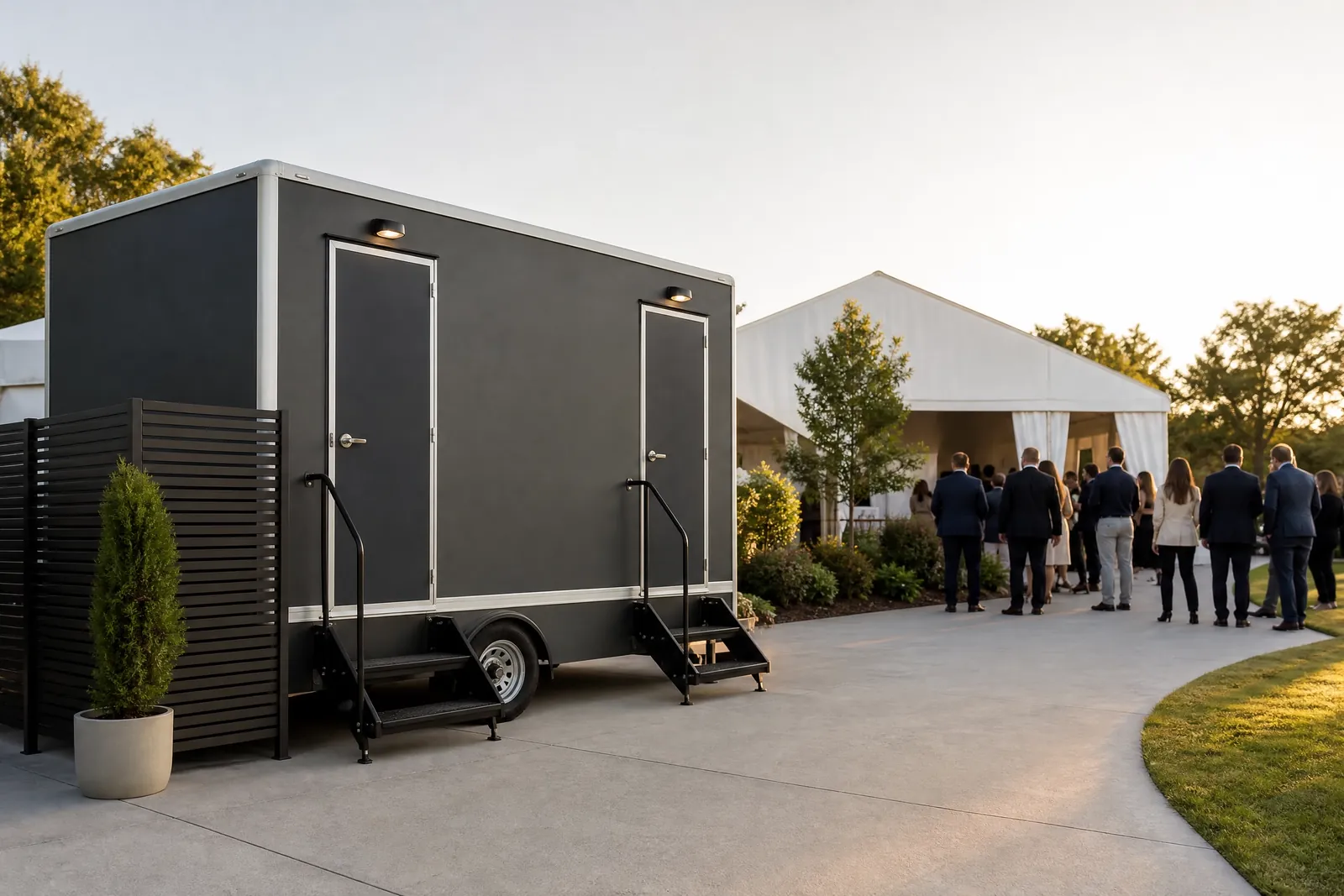
Construction timelines change, crews scale up and down, and space is often tight. Your restrooms should support the work, not slow it down. For construction sites in Hampton, we help you right-size unit counts based on crew size, shift length, and break patterns, then outline a placement plan that keeps facilities close to work areas without blocking deliveries or equipment paths.
Standard job-site units are the reliable choice for most builds and renovations. They set quickly on compacted ground, require minimal footprint, and can be positioned to reduce walk time. Where multiple trades share a site, adding an extra unit near high-traffic zones can reduce lines and keep crews on schedule. In warm months, more frequent servicing can make a noticeable difference in comfort and odor control.
If you’re working across multiple phases or buildings, consider a staggered placement strategy—moving units as the workfront shifts to minimize downtime. For larger or longer projects, pairing standard units with handwashing stations near break areas improves hygiene and helps meet site expectations. We’ll also discuss lighting, signage, and ventilation tips so your setup stays tidy and easy to maintain over the full project cycle. - What to consider: - Crew count by shift and peak overlap - Clear access for service vehicles and safe placement off equipment paths - Seasonal service frequency for heat, humidity, or extended hours - FAQs: - How often should construction units be serviced? - It depends on headcount, weather, and shift length. We’ll recommend an interval that keeps restrooms clean and stocked without over-servicing. - Can units be relocated as the site changes? - Yes. With safe access and level ground, units can be repositioned as phases move. Coordinate timing to avoid active lift or delivery windows.
Service 2
Talk with a local rental desk
Choose the setup that fits.
We can help you talk through the practical details for your construction site portable toilets plan.
Get A Quote